

The principle of 'nonaction' (wu-wei) is not to be considered inertia, laziness, laissez-faire or mere passivity. Thus, wu-wei as "not forcing" is what we mean by going with the grain, rolling with the punch, swimming with the current, trimming sails to the wind, taking the tide at its flood, and stooping to conquer. Wu-wei is thus the life-style of one who follows the Tao, and must be understood primarily as a form of intelligence - that is of knowing the principles, structures, and trends of human and natural affairs so well that one uses the least amount of energy in dealing with them.
Unfortunately, despite the undeniable seduction of such explanations, they are still incomplete. Because the nondoing is not a method that can be applied in any circumstance. Usually, nondoing has to be connected with doing, if we want to follow the Taoist logic. The adjustment to the demands of time has the exigency of a sort of behavioral flexibility that does not remain stuck in its position, but emulates the requirements of the moment. Thus, at the same time, one may have to bend over in order to succeed, or, on the contrary, to remain firm in order to win. We can find many examples in this respect in the old Taoist literature. For instance, in I-ching, hexagram no 25 - Innocence (the Unexpected) - the second line, we find that if our doing is according to the requirements of time, it will be successful even if we do not explicitly target success. In other words, it is not necessary to push for the results of an action if it is performed in due time. After all, it is like doing nothing, or like having the feeling that "everything goes smoothly". The spontaneous, instinctive action is not always suitable. The action has to be according to the Heaven (the Will of Heaven or the Mandate of Heaven, in the Confucian terms) in order to have the chance of success. Lao-tzu himself is not an unconditional partner of the nondoing if we take into account the historical fact that he held an official position at the sovereign's court. Later on, he left his work and withdrew from the mundane world, but not because he followed the principles of a fully spiritual lifestyle, but because he was disgusted with the decay of the morality at the court. Lao-tzu's reaction confirms in fact: nondoing (here in the sense of withdrawal from the public life) has to be according to the requirements of time and not an absolute principle of life. So, nondoing should be regarded as a complement of doing and not as a virtue or as an absolute model of life!
If one does not count on the harvest while plowing,
Nor on the use of the ground while clearing it,
It furthers one to undertake something.
We should do every task for its own sake as time and place demand and not with an eye to the result. Then each task turns out well, and anything we undertake succeeds.
Unfortunately, despite the undeniable seduction of such explanations, they are still incomplete. Because the nondoing is not a method that can be applied in any circumstance. Usually, nondoing has to be connected with doing, if we want to follow the Taoist logic. The adjustment to the demands of time has the exigency of a sort of behavioral flexibility that does not remain stuck in its position, but emulates the requirements of the moment. Thus, at the same time, one may have to bend over in order to succeed, or, on the contrary, to remain firm in order to win. We can find many examples in this respect in the old Taoist literature. For instance, in I-ching, hexagram no 25 - Innocence (the Unexpected) - the second line, we find that if our doing is according to the requirements of time, it will be successful even if we do not explicitly target success. In other words, it is not necessary to push for the results of an action if it is performed in due time. After all, it is like doing nothing, or like having the feeling that "everything goes smoothly". The spontaneous, instinctive action is not always suitable. The action has to be according to the Heaven (the Will of Heaven or the Mandate of Heaven, in the Confucian terms) in order to have the chance of success. Lao-tzu himself is not an unconditional partner of the nondoing if we take into account the historical fact that he held an official position at the sovereign's court. Later on, he left his work and withdrew from the mundane world, but not because he followed the principles of a fully spiritual lifestyle, but because he was disgusted with the decay of the morality at the court. Lao-tzu's reaction confirms in fact: nondoing (here in the sense of withdrawal from the public life) has to be according to the requirements of time and not an absolute principle of life. So, nondoing should be regarded as a complement of doing and not as a virtue or as an absolute model of life!
If one does not count on the harvest while plowing,
Nor on the use of the ground while clearing it,
It furthers one to undertake something.
We should do every task for its own sake as time and place demand and not with an eye to the result. Then each task turns out well, and anything we undertake succeeds.
hans-wolfgang - am Donnerstag, 22. Dezember 2005, 13:55
noch kein Kommentar - Kommentar verfassen
Chuang Tzu said:
HOW DOES THE TRUE MAN OF TAO
WALK THROUGH WALLS WITHOUT OBSTRUCTION
AND STAND IN FIRE WITHOUT BEING BURNT?
NOT BECAUSE OF CUNNING OR DARING,
NOT BECAUSE HE HAS LEARNED --
BUT BECAUSE HE HAS UNLEARNED.
HIS NATURE SINKS TO ITS ROOT IN THE ONE.
HIS VITALITY, HIS POWER,
HIDE IN SECRET TAO.
WHEN HE IS ALL ONE,
THERE IS NO FLAW IN HIM
BY WHICH A WEDGE CAN ENTER.
SO A DRUNKEN MAN WHO FALLS OUT OF A WAGON
IS BRUISED, BUT NOT DESTROYED.
HIS BONES ARE LIKE THE BONES OF OTHER MEN,
BUT HIS FALL IS DIFFERENT.
HIS SPIRIT IS ENTIRE.
HE IS NOT AWARE OF GETTING INTO A WAGON, OR FALLING OUT OF ONE.
LIFE AND DEATH ARE NOTHING TO HIM.
HE KNOWS NO ALARM, HE MEETS OBSTACLES WITHOUT THOUGHT, WITHOUT CARE,
AND TAKES THEM WITHOUT KNOWING THEY ARE THERE.
IF THERE IS SUCH SECURITY IN WINE, HOW MUCH MORE IN TAO?
THE WISE MAN IS HIDDEN IN TAO, NOTHING CAN TOUCH HIM.
HOW DOES THE TRUE MAN OF TAO -- WALK THROUGH WALLS WITHOUT OBSTRUCTION -- AND STAND IN FIRE WITHOUT BEING BURNT?
This is one of the most basic and secret teachings.
HOW DOES THE TRUE MAN OF TAO
WALK THROUGH WALLS WITHOUT OBSTRUCTION
AND STAND IN FIRE WITHOUT BEING BURNT?
NOT BECAUSE OF CUNNING OR DARING,
NOT BECAUSE HE HAS LEARNED --
BUT BECAUSE HE HAS UNLEARNED.
HIS NATURE SINKS TO ITS ROOT IN THE ONE.
HIS VITALITY, HIS POWER,
HIDE IN SECRET TAO.
WHEN HE IS ALL ONE,
THERE IS NO FLAW IN HIM
BY WHICH A WEDGE CAN ENTER.
SO A DRUNKEN MAN WHO FALLS OUT OF A WAGON
IS BRUISED, BUT NOT DESTROYED.
HIS BONES ARE LIKE THE BONES OF OTHER MEN,
BUT HIS FALL IS DIFFERENT.
HIS SPIRIT IS ENTIRE.
HE IS NOT AWARE OF GETTING INTO A WAGON, OR FALLING OUT OF ONE.
LIFE AND DEATH ARE NOTHING TO HIM.
HE KNOWS NO ALARM, HE MEETS OBSTACLES WITHOUT THOUGHT, WITHOUT CARE,
AND TAKES THEM WITHOUT KNOWING THEY ARE THERE.
IF THERE IS SUCH SECURITY IN WINE, HOW MUCH MORE IN TAO?
THE WISE MAN IS HIDDEN IN TAO, NOTHING CAN TOUCH HIM.
HOW DOES THE TRUE MAN OF TAO -- WALK THROUGH WALLS WITHOUT OBSTRUCTION -- AND STAND IN FIRE WITHOUT BEING BURNT?
This is one of the most basic and secret teachings.
hans-wolfgang - am Sonntag, 30. Oktober 2005, 22:54
Immanuel Kant, one of the great philosophers of Germany, became very sick. The doctors were at a loss, because there was no reason for his sickness. They could not find anything wrong with his body. Then one of the friends who had been out of town came back. He looked around and he said, "Don't be worried, I know what is the cause." The doctors said, "We have been searching for the cause and we don't know it. You are not a doctor -- how do you know the cause?" He said, "I know Immanuel Kant. The window in the room is the place where he used to stand every morning to see the sunrise. The neighboring house has been sold to a new owner and they have planted tall trees just close to the window. And Immanuel Kant is a man who functions just like clockwork -- moment to moment, things have to be exactly the same. These trees are the cause of his sickness." The friend went to the neighbor and told him. He said, "If this is the cause, anybody could have come and told me. Immanuel Kant is so precious a man -- we will cut down the trees immediately." The trees were removed, and the next day Immanuel Kant was perfectly healthy -- not even a toothache. But because he cannot see the sunrise from his window.... He could have seen it from somewhere else, but that was not his way. He had very fixed habits. At ten o'clock in the night he would go to bed. Everybody knew about it. Once in a while somebody who was not aware of the fact would be simply shocked, because Immanuel Kant, seeing the clock striking the hour of ten, would simply jump into his bed and cover himself with his blanket. He would not even say good night, and the man was sitting there! His servant would come and say, "The master has gone to sleep. He goes exactly according to the clock, so he cannot waste a single moment even in saying good night. Now you have to go -- you can come tomorrow, or whenever you like. But don't feel offended, he does not mean any offense to anybody." He was habituated to getting up early in the morning, at five o'clock. He loved the early morning fresh air, the crispness of it, and the silence of the road. But to get up at five was a difficulty. The servant was told that he had to wake him at five, whatsoever happens. Kant would fight, he might hit the servant. The servant was allowed to hit him, drag him out of the bed, push him into the bathroom. You could do everything, but if you allowed him to sleep, your service was finished. And this was a daily ritual: the servant beating the master, the master beating the servant. He was hiding under the blanket, and the servant was pulling him out and forcing him into the bathroom; he was coming out again and again, and trying to get into the bed. Immanuel Kant would say at that time, "What are you doing? You are my servant, and I am saying that I want to sleep!" But he had warned him, "I will say such things! You are not to listen to anything. I may say that I am feeling sick, I don't want to get up. Don't listen to any argument, any excuse: your work is to put me in the bathroom, so that at exactly five I am on the road."
He was a man of tremendous intelligence and he created a great philosophical system; but as far as his attitude, his approach towards life is concerned, he behaved very childishly -- not even in a mature way. It seems his philosophical intelligence had become overgrown, and everything else had remained retarded.
He was a man of tremendous intelligence and he created a great philosophical system; but as far as his attitude, his approach towards life is concerned, he behaved very childishly -- not even in a mature way. It seems his philosophical intelligence had become overgrown, and everything else had remained retarded.
hans-wolfgang - am Mittwoch, 19. Oktober 2005, 12:16
noch kein Kommentar - Kommentar verfassen
Our joy, our laughter, our love, our silence, our meditation, are a far bigger force than nuclear weapons. They can try, they can kill our bodies; they cannot kill our spirit. And the moment they kill our bodies they are really getting into greater danger, because then our spirits are free to go around the world, with no visa, no passport, no green card. Taoism is preparing you for that.
Taoists have nothing to do with politics.
Taoists are the only group of people in the whole world which is apolitical.
You are living in the dark valley of your unconscious. You are fast asleep.
If you want to be friends, then awake.
You have to be responsible for yourself. You have to become your own savior.
Be independent.
Be free of mind.
Be centered.
Experience the ecstasy, the vast experience of ultimate blissfulness.
Then only can you be friends.
We are tortured by these popes, shankaracharyas, imams, rabbis. It is time that man is freed from all these fetters. You have to be yourself.
Imitators are phony. Imitators are bound to be unnatural, because they are going against their potential.
Nature produces each individual as unique. In twenty-five centuries, how many Buddhist monks have been trying to become Gautam Buddha? Not a single one has succeeded. For two thousand years, how many Christian monks have been trying to become Jesus Christ? None of them has succeeded. And the same is the story around the earth in all the religions.
Still we are blind; we can't see a simple fact, that Jesus, Buddha, Moses, Mohammed -- or anybody, known or unknown -- is unique, unrepeatable.
Nature does not like carbon copies. Nature loves original faces.
Taoistic effort is to take away all the barriers so that you can discover your original face; to remove all the masks so that you can discover who, in reality, you are. And the moment you realize yourself, that will be the moment of your gratitude towards taoism.
Taoists have nothing to do with politics.
Taoists are the only group of people in the whole world which is apolitical.
You are living in the dark valley of your unconscious. You are fast asleep.
If you want to be friends, then awake.
You have to be responsible for yourself. You have to become your own savior.
Be independent.
Be free of mind.
Be centered.
Experience the ecstasy, the vast experience of ultimate blissfulness.
Then only can you be friends.
We are tortured by these popes, shankaracharyas, imams, rabbis. It is time that man is freed from all these fetters. You have to be yourself.
Imitators are phony. Imitators are bound to be unnatural, because they are going against their potential.
Nature produces each individual as unique. In twenty-five centuries, how many Buddhist monks have been trying to become Gautam Buddha? Not a single one has succeeded. For two thousand years, how many Christian monks have been trying to become Jesus Christ? None of them has succeeded. And the same is the story around the earth in all the religions.
Still we are blind; we can't see a simple fact, that Jesus, Buddha, Moses, Mohammed -- or anybody, known or unknown -- is unique, unrepeatable.
Nature does not like carbon copies. Nature loves original faces.
Taoistic effort is to take away all the barriers so that you can discover your original face; to remove all the masks so that you can discover who, in reality, you are. And the moment you realize yourself, that will be the moment of your gratitude towards taoism.
hans-wolfgang - am Samstag, 8. Oktober 2005, 18:18
noch kein Kommentar - Kommentar verfassen
 In ancient China, the keeper of the Imperial Library, Lao Tzu, was famous for his wisdom. Perceiving the growing corruption of the government, he left for the countryside. On his way, the guard at the city gates asked Lao Tzu to write out the essence of his understanding to benefit future generations. Lao Tzu wrote the Tao Te Ching, left, and was never heard of again.
The Tao Te Ching (also called "The Tao", "The Dao" or the "Dao De Jing"), by Lao Tzu, is one of the most influential books in history. It is the source of famous Chinese sayings such as "Those who know do not speak, those who speak, do not know" and "Even a 1,000 mile journey starts with a single step".
If the people are free of avarice and desire,
even the most cunning grifter has no opportunity to corrupt them.
-Lao Tzu
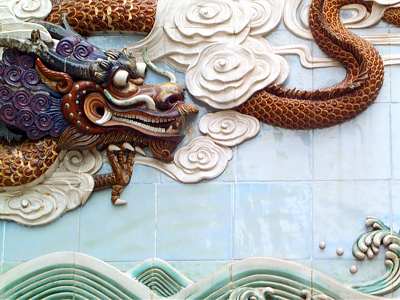
It seems there was once a man that who loved dragons so much, he put dragon pictures and sculptures all over his house. The Dragon King was very impressed, so he sent one of his dragons down to say hello to the man and thank him for his efforts. The dragon politely knocked on the front door. When the dragon-lover opened the door, he promptly died of a heart attack!
The moral is, of course, to ensure you can act as well as you can speak.
If you don't trust people,
people will not trust you.
hans-wolfgang - am Freitag, 7. Oktober 2005, 21:18
noch kein Kommentar - Kommentar verfassen


